I. Introduction
In the high-octane world of racing, where speed and performance reign supreme, one crucial aspect often overlooked by spectators but of utmost importance to engineers and drivers alike is cooling. Whether it’s the blistering heat of a desert track or the intense demands of a high-speed circuit, keeping a race car’s components at optimal temperatures can mean the difference between victory and a DNF (Did Not Finish). This is where the expertise of mini chiller manufacturers comes into play, providing bespoke cooling solutions that are as innovative as they are essential. From Formula 1 to endurance racing, the role of effective cooling systems has evolved alongside the cars themselves, and today, we delve into the fascinating realm of racing cooling and how mini chillers are driving the pursuit of speed.

II. The Intricate World of Racing Cooling Demands
When a race car hurtles around the track at breakneck speeds, its engine is performing an astonishing feat of power generation. However, this immense power output comes at a cost – an enormous amount of heat. The combustion process within the engine, combined with the friction from countless moving parts, can quickly send temperatures soaring. Without effective cooling, a multitude of problems can arise.
For starters, overheating can lead to a significant drop in engine performance. As temperatures climb, the air density within the engine decreases, reducing the amount of oxygen available for combustion. This results in a less efficient burn, sapping power and slowing down lap times. In extreme cases, it can even cause engine misfires or stalling, bringing the race to a grinding halt.
Moreover, excessive heat can wreak havoc on engine components. Pistons, cylinders, and bearings are all designed to operate within specific temperature ranges. When these limits are exceeded, the materials can expand beyond their tolerances, leading to increased wear and tear. This not only shortens the lifespan of these crucial parts but also poses a serious risk of catastrophic failure, potentially scattering debris on the track and endangering other drivers.
Beyond the engine, other systems in the race car also rely on proper cooling. The transmission, for example, generates heat as it transfers power from the engine to the wheels. If it overheats, gear shifting can become sluggish or even impossible, compromising the driver’s ability to control the vehicle. Brakes, too, are subjected to intense heat during hard braking. Without adequate cooling, brake fade can occur, reducing stopping power and jeopardizing safety on the track.
In essence, the need for precise and efficient cooling in racing is not just about maintaining peak performance; it’s about safeguarding the integrity of the entire vehicle and ensuring the safety of the driver. It’s a delicate balance that requires cutting-edge technology and meticulous engineering, making the role of mini chiller manufacturers all the more vital.
III. Mini Chillers: Tailored Cooling Solutions
III.1 Compact Yet Powerful Design Philosophy
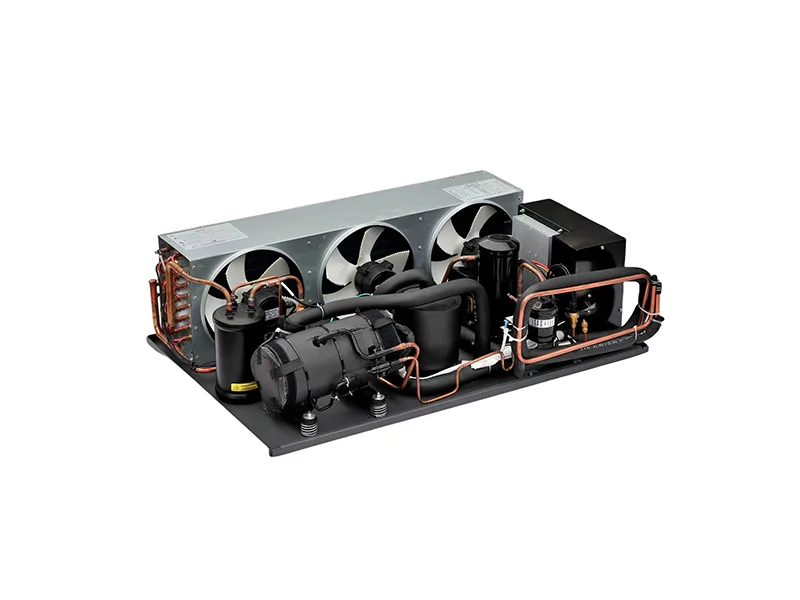
Mini chillers, as the name suggests, are designed with space constraints in mind. In the cramped confines of a race car, every cubic inch matters. These ingenious cooling units pack a punch despite their diminutive size. Manufacturers achieve this by leveraging advanced engineering techniques and high-performance materials. The compressors, condensers, and evaporators are carefully selected and optimized to deliver maximum cooling efficiency within a minimal footprint. For instance, using microchannel heat exchangers allows for a greater surface area for heat transfer in a more compact design, ensuring that the chiller can dissipate large amounts of heat rapidly without taking up precious space in the vehicle. This compact yet powerful design ethos means that teams can install reliable cooling systems without sacrificing other crucial components or adding excessive weight, which is a death knell in racing.

III.2 Precision Temperature Regulation Mastery
Temperature control in racing is not a one-size-fits-all affair. Different components of the race car, from the engine’s delicate electronics to the brute force of the braking system, require specific temperature ranges to operate at peak performance. Mini chiller manufacturers have risen to this challenge by integrating state-of-the-art temperature control systems. These often incorporate intelligent thermostats, sensitive temperature sensors, and advanced control algorithms. The sensors, strategically placed throughout the vehicle, feed real-time temperature data back to the chiller’s control unit. This unit then processes the information and adjusts the cooling output with pinpoint accuracy. For example, during a high-speed stint, the engine might demand a rapid drop in coolant temperature to prevent overheating. The mini chiller responds by ramping up its refrigeration cycle, circulating chilled water at a precisely calibrated rate to bring the temperature back into the optimal zone. This level of precision not only safeguards against performance-robbing heat spikes but also extends the lifespan of critical components, reducing the need for costly replacements and maintenance between races.
IV. Cutting-edge Cooling Technologies Employed
IV.1 High-efficiency Heat Exchangers
At the heart of every mini chiller lies the heat exchanger, a component that is constantly evolving to meet the demands of racing cooling. Manufacturers are increasingly turning to advanced designs and materials to enhance heat transfer efficiency. For example, microchannel heat exchangers have become a staple in modern mini chillers. These compact marvels feature tiny channels through which refrigerant and coolant flow, maximizing the surface area available for heat exchange. Made from high-conductivity materials like aluminum alloys, they can rapidly transfer heat away from critical components, ensuring that temperatures remain stable even under extreme loads. Additionally, some manufacturers are experimenting with nanofluids – fluids infused with nanoparticles – to further boost the heat transfer capabilities of the cooling system. These cutting-edge heat exchangers not only improve cooling performance but also contribute to the overall compactness and lightweight design of the mini chiller, two factors that are non-negotiable in the highly competitive world of racing.
IV.2 Advanced Refrigerant Systems
The choice of refrigerant is another critical aspect of racing cooling technology. In recent years, there has been a significant shift towards more environmentally friendly and high-performance refrigerants. Traditional refrigerants like R22, which had a high ozone depletion potential, have been phased out in favor of alternatives such as R134a, R407C, and R410A. These newer refrigerants not only have a lower impact on the ozone layer but also offer better thermodynamic properties, allowing for more efficient cooling cycles. Mini chiller manufacturers are also investing in research and development to optimize the refrigerant circuit within the chiller. This includes using advanced expansion valves and control systems to precisely meter the flow of refrigerant, ensuring that it absorbs and releases heat at the most opportune moments. By fine-tuning the refrigerant system, manufacturers can achieve higher coefficients of performance (COP), meaning more cooling power for every unit of energy consumed. This is not only beneficial for the environment but also gives racing teams a competitive edge by reducing the power drain on the vehicle’s electrical system and allowing more energy to be directed towards propulsion.
V. Customization: Catering to Diverse Racing Needs
V.1 Formula 1: Pushing the Envelope of Speed
In the glitzy and high-tech world of Formula 1, where milliseconds can decide the outcome of a race, mini chiller manufacturers are tasked with creating cooling solutions that are as revolutionary as the cars themselves. F1 cars are the epitome of speed and agility, hurtling around tracks at mind-boggling velocities. This extreme performance demands a cooling system that can keep up.
Mini chiller manufacturers work closely with F1 teams to design bespoke cooling units. For instance, they focus on reducing weight to the bare minimum without compromising cooling efficiency. This often involves using lightweight yet durable materials like carbon fiber composites for the chiller housing. The compact design must also fit snugly within the limited space available in the car’s chassis, without disrupting the aerodynamics that are so crucial for maintaining high speeds.
Moreover, in Formula 1, rapid temperature changes are the norm. During a qualifying lap, the engine and associated components can go from relatively cool standby temperatures to red-hot in a matter of seconds. Mini chillers for F1 are equipped with ultra-fast response systems, capable of ramping up cooling capacity almost instantaneously. Advanced control software continuously monitors multiple temperature points throughout the vehicle and adjusts the chiller’s output in real-time. This level of precision and responsiveness ensures that the car’s performance remains consistent lap after lap, giving drivers the confidence to push the limits and vie for pole position.

V.2 Endurance Racing: Sustaining Performance Over the Long Haul
Endurance racing, with events like the 24 Hours of Le Mans, presents a different set of challenges altogether. Here, the name of the game is not just raw speed but also reliability and consistency over an extended period. Mini chiller manufacturers have to engineer cooling systems that can endure the grueling demands of racing non-stop for hours on end.
One key aspect is the need for larger coolant reservoirs. Endurance race cars require a steady supply of cooled fluid to maintain optimal operating temperatures throughout the long race. The mini chillers are designed with oversized tanks to store an ample amount of coolant, reducing the frequency of refills and minimizing the time the car spends in the pits. Additionally, redundancy is built into the systems. Dual compressors, for example, can be installed, so that if one fails, the other can take over seamlessly, preventing a catastrophic overheating situation that could end the team’s race.
To further enhance reliability, remote monitoring capabilities are often incorporated. Team engineers back in the pits can keep a close eye on the chiller’s performance, temperature readings, and any potential warning signs. This allows them to proactively address issues before they escalate, ensuring that the car stays on track and continues to perform at its best as the clock ticks away through the night and into the next day. Whether it’s the searing heat of midday or the cool of the early morning, the custom mini chillers for endurance racing are engineered to adapt and keep the car running smoothly, mile after grueling mile.

VI. Quality Assurance and Reliability
In the high-stakes world of racing, reliability is non-negotiable. Mini chiller manufacturers understand that a single cooling failure can spell disaster for a race team. To ensure their products meet the most exacting standards, they implement rigorous quality assurance processes.
It all begins with the careful selection of raw materials. Every component, from the tiniest sensor to the largest heat exchanger, must be of the highest quality. Manufacturers source materials from trusted suppliers and subject them to thorough inspections. For example, the metals used in the chiller’s construction are tested for strength, corrosion resistance, and thermal conductivity to guarantee optimal performance under extreme conditions.
During the production process, strict quality control measures are enforced. Advanced manufacturing techniques, such as computer-aided design (CAD) and precision machining, are employed to ensure that each part is fabricated to exact specifications. Automated assembly lines, guided by meticulous engineering blueprints, minimize human error and ensure consistency across every unit produced. Additionally, continuous monitoring of the production environment, including temperature, humidity, and cleanliness, helps maintain the integrity of the manufacturing process.
Post-installation, the support from mini chiller manufacturers doesn’t wane. Regular maintenance schedules are recommended and adhered to, with technicians performing thorough inspections to preempt any potential issues. In the event of a breakdown, rapid response teams are on standby, ready to swoop in and diagnose and repair the problem with minimal downtime. This could involve replacing a faulty component, recalibrating the control system, or addressing any refrigerant leaks. Additionally, manufacturers offer continuous technical support, providing racing teams with access to a wealth of knowledge. Whether it’s a query about optimizing cooling settings for a particular track or troubleshooting a minor glitch, the manufacturers’ experts are just a phone call or an email away, ensuring that the cooling system remains a reliable ally throughout the racing season.
IX. Conclusion
In conclusion, the role of mini chiller manufacturers in the realm of racing cooling cannot be overstated. They are the unsung heroes behind the scenes, providing the technological prowess and bespoke solutions that enable race cars to reach their full potential. From the searing heat of the racetrack to the demanding requirements of high-performance engines, mini chillers have proven time and again to be the critical link in maintaining optimal operating conditions. As the racing world continues to evolve, with new challenges and opportunities on the horizon, these manufacturers will undoubtedly remain at the forefront of innovation. Their commitment to quality, customization, and continuous improvement ensures that racing teams can rely on their cooling systems lap after lap, season after season.